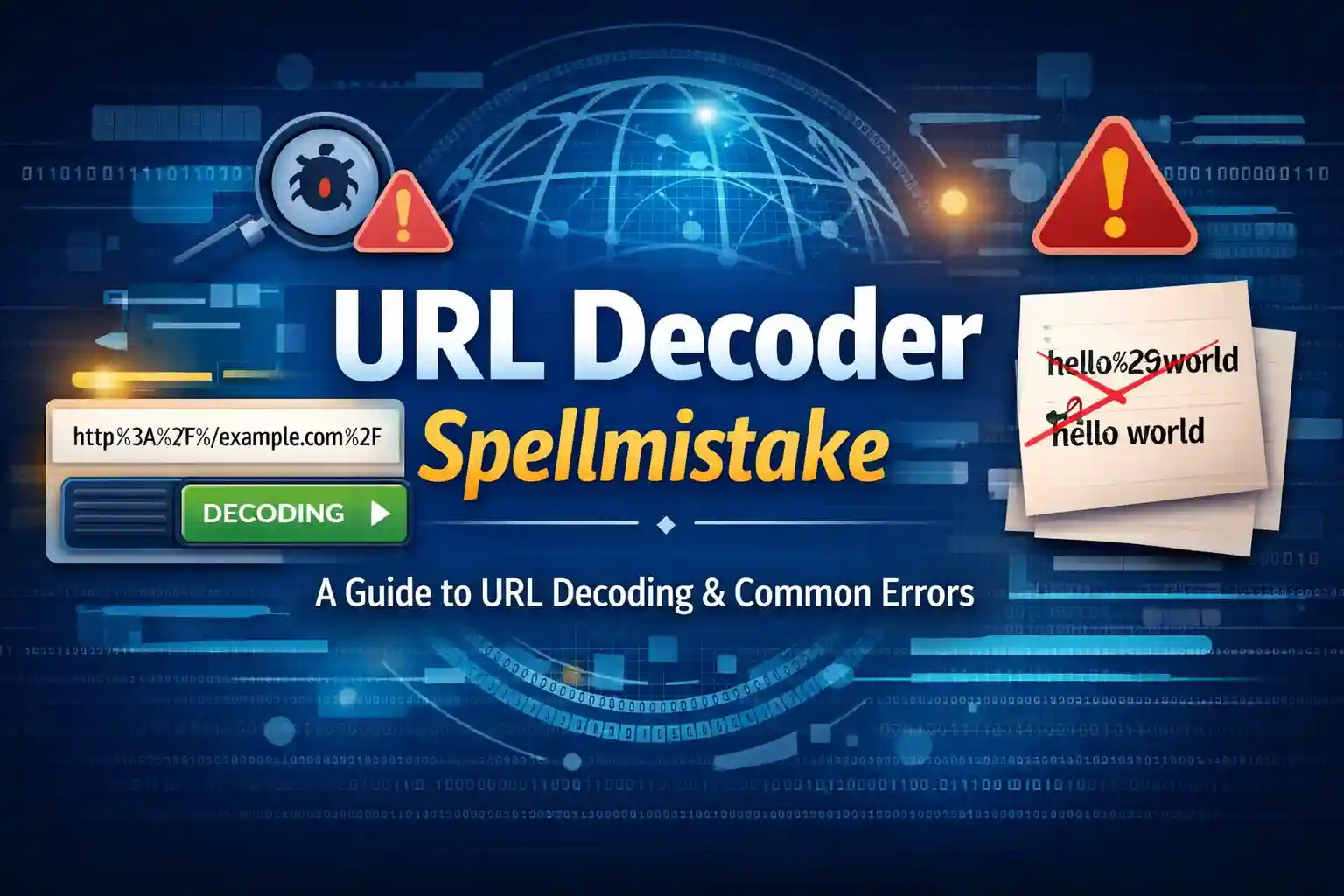
When browsing the internet, you’ve probably encountered links that look messy, with %20, %3A, or other strange characters. These are URL-encoded characters, and sometimes, mistakes slip in—known as URL decoder spellmistakes. Essentially, they happen when a URL isn’t decoded correctly or when someone mis-types the URL during encoding or decoding.
These mistakes can prevent websites from loading correctly, break links in emails, and even interfere with SEO efforts. If you’ve ever clicked a link and landed on a “404 Not Found” page, there’s a chance a small spelling error in the URL encoding caused it.
What Causes URL Decoder Spellmistakes?
Several factors can lead to URL decoder errors:
- Manual Typing Errors: Copying or typing URLs incorrectly, especially with special characters.
- Incorrect Encoding/Decoding: Using the wrong decoder tool or software that doesn’t handle certain characters properly.
- Browser Misinterpretation: Some browsers automatically decode certain characters, while others don’t, causing inconsistency.
- Legacy Systems: Older web platforms might not follow modern URL encoding standards, introducing mistakes.
I personally experienced this while sharing a link to a client dashboard. I copied a URL with %2F in place of /, and the client couldn’t access the page until I corrected it manually—an experience that highlighted how subtle errors can disrupt workflow.
Understanding URL Decoder Errors Through Examples
Imagine a digital marketing agency sending a newsletter with multiple links to campaign reports. If even one link contains a URL decoder spellmistake, recipients may see a broken page. This doesn’t just frustrate users—it reduces engagement and can lead to lost business opportunities. A small decoding error can ripple across hundreds or thousands of users, making accuracy critical.
Common Types of URL Decoder Errors
| Type of Mistake | Example | Effect | How to Fix |
|---|---|---|---|
| Misspelled Encoded Characters | %2f instead of %2F | Page fails to load | Correct uppercase/lowercase |
| Double Encoding | %2520 instead of %20 | Displays incorrectly | Decode twice |
| Missing Characters | %20 omitted | Words join together | Re-encode URL properly |
| Wrong Tool Usage | Using a basic text editor | Characters remain encoded | Use a reliable URL decoder |
This table highlights why understanding the nuances of encoding and decoding matters. Small inconsistencies can disrupt the user experience significantly.
How to Avoid URL Decoder Spellmistakes
- Use Reliable Tools: Always use well-known URL encoder/decoder tools online or built into your web platform.
- Check Case Sensitivity: URL encoding is case-sensitive;
%2Fis not the same as%2f. - Test Links: Before publishing, click every link to ensure it loads correctly.
- Educate Teams: If multiple people are handling URLs, ensure everyone understands encoding standards.
- Automate Where Possible: Automation tools can handle encoding consistently, reducing human error.
Unique Value: Why Correct Decoding Matters
Correct URL decoding isn’t just a technical necessity—it improves accessibility, SEO, and overall user trust. Search engines can struggle to index URLs with encoding mistakes. Broken URLs can lead to poor site structure signals, hurting ranking. On the user side, smooth and accurate links reflect professionalism and reliability.
For example, e-commerce websites often have long URLs with product IDs, categories, and query parameters. A single spellmistake in these URLs can redirect customers to incorrect pages or prevent checkout. Fixing decoding issues directly impacts sales and user satisfaction.
Practical Tips for Web Professionals
- Cross-Browser Testing: Ensure links work across Chrome, Firefox, Safari, and Edge.
- Monitor Analytics: Track broken links or 404 errors; recurring patterns may indicate URL decoder mistakes.
- Use Relative URLs When Possible: Reduces errors when moving content across servers or platforms.
- Educate Clients: Many small businesses don’t realize these issues exist; simple guidance can save hours.
Read More: Sitemap Generator by Spellmistake Tool Guide
Conclusion
URL decoder spellmistakes may seem minor, but their impact on user experience, SEO, and business operations can be substantial. By understanding the causes, using reliable tools, and following best practices, you can prevent these errors. Whether you’re a web developer, marketer, or content creator, taking care of URL accuracy ensures smooth browsing, better engagement, and higher search engine rankings.
FAQs
Q1: What is a URL decoder spellmistake?
A URL decoder spellmistake occurs when a URL is incorrectly encoded or decoded, leading to broken links or misinterpreted characters.
Q2: How can I fix URL encoding mistakes?
Use a reliable online URL decoder tool, check for uppercase/lowercase errors, and ensure all special characters are properly encoded.
Q3: Why do URL decoder errors affect SEO?
Search engines may fail to index URLs correctly if encoding is inconsistent, causing poor rankings and broken site structure signals.
Q4: Are URL decoder errors common?
Yes, especially when manually typing URLs or using tools that don’t handle special characters correctly.
Q5: Can I automate URL encoding to prevent mistakes?
Yes, many CMS platforms and development frameworks include automated URL encoding features to minimize human errors.